Showing posts with label children. Show all posts

Thursday, January 26, 2012

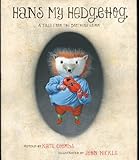
New Book: Hans My Hedgehog: A Tale from the Brothers Grimm by Kate Coombs and John Nickle


Hans My Hedgehog: A Tale from the Brothers Grimm by Kate Coombs (Adapter), Brothers Grimm (Author), John Nickle (Illustrator) was released this past Tuesday.

I haven't seen copy in person, but I'm always thrilled with a new picture book featuring one of the less popular fairy tales. Hans My Hedgehog is a sentimental favorite of many fairy tale fans and hopefully this book will also introduce the tale to a new audience.


Book description:

A classic tale of love and acceptance from the Brothers Grimm is beautifully rendered in this magical retelling.Hans is an unusual boy. Born a hedgehog from the waist up, he knows what it’s like to truly be an outcast. Even his amazing fiddle playing can’t help him fit in. So Hans flees to the forest with his herd of loyal pigs and only his music to keep him company. But then a most unusual thing happens: When Hans crosses paths with two kings with two lovely daughters, his luck starts to change. Will this lonely soul find true love after all?

This lively and lyrical retelling of the classic Grimm’s tale, paired with lush, detailed illustrations, reminds us of the power of music, the importance of belonging, and the transformative effect of love.


The reviews for the book so far are great--Kirkus starred it--and there is an interview with Kate Coombs at The Enchanted Inkpot this week, too. Most of the interview is about Coombs work as an author, but she answered a few questions about fairy tales, too. Here's an excerpt:

I don't see as many picture book fairy tales these days. Why is that?

Hans My Hedgehog is kind of an anomaly because very few picture book retellings of fairy tales are being published right now, after a heyday that took place 20 or so years ago. Many parents want their children to jump into reading chapter books right out of kindergarten. They seem to think that picture books are babyish. This is unfortunate because picture books for children in grades 1-3 can make a wonderful bridge and hook kids into wanting to read more.

Could you talk a little about fairy tale retellings for middle grade and young adult readers?

Even as the picture book fairy tale is showing signs of becoming extinct, novelizations for MG/YA are really taking off. So at least we aren't losing the stories altogether! I would even say that the 1990s and this new century have brought a golden age of fairy tale retellings for older children. For example, consider the incredible variety of Cinderella retellings: you get Ella Enchanted by Gail Carson Levine, which famously imagines an explanation for Cinderella's passiveness; you get a lesbian Cinderella tale in Malinda Lo's Ash; and you get a cyborg Cinderella in Marissa Meyer's new book, Cinder. I love seeing what different authors do with the same story bones. The retelling movement is starting to reach beyond European tales more frequently, I am happy to say. Grace Lin's book, Where the Mountain Meets the Moon, draws on Chinese folklore, and Jasmine Richard's The Book of Wonders uses Scheherazade and Sinbad to create something new. I can't wait to see what happens next.

What advice do you have for someone planning on doing an MG/YA retelling?

The retellings are coming fast and furiously, so as an author, you have to be careful what you choose to retell. A few years ago, I had just about finished a novelization of "The Twelve Dancing Princesses," a story I chose because no one had done much with it, when someone else beat me to the punch. Since then, another half dozen versions have come out! I won't even tell you the story I'm tinkering with now. Suffice it to say, it's a lesser known fairy tale.

Whatever you decide to retell, you should work on giving your version a unique spin, the way Meyer did with Cinder, the way Jane Yolen did recently in her Appalachian Snow White retelling, Snow in Summer. It isn't enough to retell a story: you have to make it your own. That's really what Gail Carson Levine did with the Cinderella story. That and her fine characterization are what keep Ella Enchanted in print.


I'm hoping this fairy tale popularity will inspire publishers to give us some new beautiful fairy tale picture books. I have a lot of more obscure but interesting ones on my wishlist actually after working on all of these SurLaLune compilations and translating a few. There are some great Cinderellas out there as well as Beauty and the Beast and Snow White.

Monday, January 23, 2012

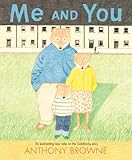
Picture Book: Me and You by Anthony Browne


While I have Goldilocks on everyone's brain today, I wanted to share a somewhat recent release (2010) that I missed until I few weeks ago and have been saving until Goldilocks was on my mind. The book is Me and You by Anthony Browne as author and illustrator who has offered us interesting fairy tale visions in the past.

Book description:

A small bear goes for a stroll in the park with his parents, leaving their bowls of porridge cooling on the kitchen table. Meanwhile, a girl with golden hair is hopelessly lost in a big, frightening city when she comes across a house with the door left invitingly open. Inside are three bowls of porridge in the kitchen, three chairs in the living room, and three comfortable-looking beds upstairs, and no one seems to be home . . .
For me, it's hard to see Goldilocks in a fresh way, but this book definitely puts a different twist on a the tale and makes it a different story. Goldilocks is not the brat she is in so many versions, think James Marshall's version in particular which I also adore.


Friday, January 6, 2012

New Book: Nursery Rhyme Comics: 50 Timeless Rhymes from 50 Celebrated Cartoonists


Nursery Rhyme Comics: 50 Timeless Rhymes from 50 Celebrated Cartoonists made the NYPL's Children's Books 2011: Graphic Novels list. There weren't many other fairy tale or folklore related books on any of their lists this year, other than Breadcrumbs by Anne Ursu which I think ended up the most recommended fairy tale retelling in the end of the year lists. It certainly appeared on quite a few of them. Perhaps Disney should look to it for their Snow Queen interpretations.

But back to why we have this post:


Which reminded me that I hadn't featured the book on SurLaLune yet.


I am a Nursery Rhyme fan and I admit a soft spot for Hickory Dickory Dock, so the illustrations for it sold me on the book. But I have more to share which I will let speak for themselves along with the usual publisher description and such.


Book Description:

First Second is very proud to present Nursery Rhyme Comics. Featuring fifty classic nursery rhymes illustrated and interpreted in comics form by fifty of today’s preeminent cartoonists and illustrators, this is a groundbreaking new entry in the canon of nursery rhymes treasuries.

From New Yorker cartoonist Roz Chast’s “There Was a Crooked Man” to Bad Kitty author Nick Bruel’s “Three Little Kittens” to First Second’s own Gene Yang’s “Pat-a-Cake,” this is a collection that will put a grin on your face from page one and keep it there.

Each rhyme is one to three pages long, and simply paneled and lettered to ensure that the experience is completely accessible for the youngest of readers. Chock full of engaging full-color artwork and favorite characters (Jack and Jill! Old Mother Hubbard! The Owl and the Pussycat!), this collection will be treasured by children for years to come.

Nursery Rhyme Comics cartoonists:


Nick Abadzis; Andrew Arnold; Kate Beaton; Vera Brosgol; Nick Bruel; Scott Campbell; Lilli Carre; Roz Chast; JP Coovert; Jordan Crane; Rebecca Dart; Eleanor Davis; Vanessa Davis; Theo Ellsworth; Matt Forsythe; Jules Feiffer; Bob Flynn; Alexis Frederick-Frost; Ben Hatke; Gilbert Hernandez; Jaime Hernandez; Lucy Knisley; David Macaulay; Mark Martin; Patrick McDonnell; Mike Mignola; Tony Millionaire; Tao Nyeu; George O’Connor; Mo Oh; Eric Orchard; Laura Park; Cyril Pedrosa; Lark Pien; Aaron Renier; Dave Roman; Marc Rosenthal; Stan Sakai; Richard Sala; Mark Siegel; James Sturm; Raina Telgemeier; Craig Thompson; Richard Thompson; Sara Varon; Jen Wang; Drew Weing; Gahan Wilson; Gene Luen Yang; Stephanie Yue; and an introduction by Leonard Marcus.

Tuesday, December 13, 2011

Op Ed: The new fad for fairy tales shows our retreat from complex reality


Oi vay! Here's a hot opinion piece from the Independent UK. It's much longer and this is just a small bit I'm extracting here to tease and provoke discussion.

From Terence Blacker: The new fad for fairy tales shows our retreat from complex reality:

Even when Hollywood retells these stories, providing gender switches and in-jokes to subvert the archetypes and allow modern audiences to feel sophisticated, the moral certainties behind them remain. In other words, fairy tales are the perfect entertainment for times in which there is a longing for a simple world of good and bad, the deserving and the punished. Responding to this year's British Social Attitudes survey, which revealed a startling decline in empathy towards others, a spokesman for the Policy Exchange think tank summed up the mood: "People's idea of fairness is reciprocal – something for something."

No wonder fairy tales are in vogue. Today, many people are too busy, too cynical, to see those in public life as messy, flawed humans; they want villains (bankers, hackers, politicians) and heroes (the celebrity of the moment). The attempts of our leaders to come up with some greyish compromise of a solution appeals not one bit.

With the easily earned sentimentalism of a folk tale, there is, balancing it out, a brutal form of justice. Hollywood's version of one famous fairy tale is called Hansel and Gretel Witch Hunters, and follows the young heroes on a trail of vengeance, as they kill witches all over the world. The director's last film was about Nazi zombies. It may be a fair way from the Brothers Grimm and their gingerbread house, but it accords perfectly with the mood of the moment.
My head is spinning with holiday projects and work, so my head is having a hard time even starting to discuss this one. There are valid points here, but as with many op-ed pieces, it's one dimensional and uses one single interpretation to promote an opinion. But "fairy tales are simplistic and take us back to our childish needs" is one way to interpret the article which I would, of course, argue vehemently against if my brain was working today. But then again, doesn't my work here do that for me here every day anyway? The argument also relies in a way on the false assumption these tales existed originally and primarily for children in the first place.

Discuss amongst yourselves....

"Easily earned sentimentalism?" Oi again!

Tuesday, November 29, 2011

At NYT Blog: Are Fairy Tales Really for Children?


(discussed in linked blog, too)

There are LOTS of articles and discussions consisting "Fairy Tales: Are They For Children?" currently circling the media thanks to all the dark retellings visible right now, such as Grimm and Snow White and the Huntsman to name a few.

The latest was a blog post on the New York Times site yesterday at Are Fairy Tales Really for Children? By KJ DELLANTONIA. Of course, these are not new questions to readers here, but it is interesting to see what the mainstream world says.

A classic fairy tale is dark, implacable in matters of life and death, and above all politically incorrect, and children (including my childhood self) love them anyway. Parents are the ones who struggle.

We do not want to read of how the father of Hansel and Gretel abandons them in the woods at the behest of his new wife with scarcely a backward glance. We balk at the description of Sleeping Beauty, who has “all the perfections imaginable,” which is to say that she is beautiful, witty, graceful, and sings, dances and plays music “perfectly well” but has apparently no need of brains, ambition or strength. As for “Little Red Riding Hood,” who never returns from her trip to Grandma’s in the version told in “The Blue Fairy Book,” Andrew Lang’s classic compilation? It was all I could do, reading it when my kids were younger, to keep from tacking on a different ending myself.

I didn’t. But that moment — when you turn the page of a familiar tale and find yourself saying “and presently he fell upon the good woman and ate her up in a moment” to your wide-eyed child — stirs something universal in parents just as experts say fairy tales speak to something universal in kids. It’s not that we don’t think our kids have contemplated being orphaned or eaten by beasts. It’s that we don’t want to appear to condone that kind of thing. So although I have read fairy tales aloud, many times, and I hope to read these, I have to admit that there are plenty of nights when I reach for something with a little less bite.
Nothing new, but always a hot topic, especially when the media grabs a hold of it...

Wednesday, November 16, 2011

From Cynsations: Interview with Anne Ursu


Anne Ursu, author of Breadcrumbs, a Snow Queen retelling, has a compelling interview at Cynsations today.

Here's the beginning:

In Hans Christian Andersen’s “The Snow Queen,” Gerda and Kai are best friends until the day a shard of magic mirror falls into Kai’s eye and he’s cruel to Gerda.

In Breadcrumbs (HarperCollins, 2011), the same thing happens to Minneapolis fifth-graders Hazel and Jack. They’re best friends in the world, until one day Jack just changes. And then he disappears. Hazel learns he’s been taken into the woods by a witch-like woman in white. Her plan is simple: go into the woods, save her friend, and they can all live happily ever after.

But the fairytale woods in Breadcrumbs are not a happily-ever-after kind of place. Really, fairytale woods rarely are. The Cinderella-type stories that end with palace weddings and promises of eternal bliss are the succulent gingerbread houses that lure us into the fey world of mischief, vendettas, curses, and cruelty, where children are neglected, orphaned, abandoned—and that’s just at the beginning.

Child readers devour the tales, knowing full well what really lurks inside gingerbread houses. I think the idea that fairy tales are happy comes from adults, from a wish they have for kids and for the stories they love.

It’s easy to be so dazzled by fairy-godmother glass slippers that you forget a pair of shoes can just as easily make a girl dance herself to death.

And more that simply shouldn't be missed:

That's it. The truth is not so terrible that it can't be told. Sometimes the world is completely outside of the child's control. Growing up is a process of change, all the time, and the rules change too. Friends fall away, people get sick, families break apart, other kids are cruel. Nothing is assured, least of all happy endings. But that doesn't mean the world isn't so terrible you can’t live in it. That you can’t thrive in it.

The trick is simply figuring out how. And this is what stories help kids do.

I haven't read Breadcrumbs yet, but I am drawn to it even more after reading this interview, so hopefully soon. I have to admit the primary problem is that I don't have it in ebook format which is how I read most of my fiction these days....

Monday, October 10, 2011

No More Adventures in Wonderland by Maria Tatar


Speaking of the dark (see my previous post), Maria Tatar had an op-ed piece in the New York Times over the weekend about the dark in children's literature.

From No More Adventures in Wonderland by MARIA TATAR:

J. M. Barrie’s Neverland, like Lewis Carroll’s Wonderland before it, delivers on the luminous promise of magic, with fairy dust and rainbow water, in a world ablaze with color and expressive energy. Yet the authors of “Peter Pan” and “Alice’s Adventures in Wonderland” also understood that “what if?” had a dark side: the Queen of Hearts ritually demands nearly everyone’s head and Captain Hook repeatedly brandishes his trademark weapon, while a clock ticking inside a crocodile reminds us that time is running out.

These are the traditional villains of children’s books — fabulous monsters with a touch of the absurd. Like Maurice Sendak’s Wild Things and countless others, they walk a fine line between horror and zany eccentricity. They may frighten young readers, but their juvenile antics strip them of any real authority. Alice shrieks with delight when she learns that the Duchess has boxed the Queen’s ears and shouts words like “Nonsense!” to banish threats, while Peter triumphs over a pirate who undermines himself by worrying about “good form” and then resorting to childish practices like biting.

Many authors of more recent books for children and teenagers have similarly crossed over to the dark side, and we applaud them for it. But the savagery we offer children today is more unforgiving than it once was, and the shadows are rarely banished by comic relief. Instead of stories about children who will not grow up, we have stories about children who struggle to survive.

You'll have to click through to read more and Tatar's final opinions, but it is certainly worth the time. Feel free to come back here and share any thoughts.

Wednesday, October 5, 2011

New Book: Aesop's Fables: A Pop-Up Book of Classic Tales


Most readers here know by now that I am a sucker for a popup book. So much so that I actually preordered Aesop's Fables: A Pop-Up Book of Classic Tales  illustrated by Chris Beatrice and Bruce Whatley with paper engineering by Kees Moerbeekover a year ago. The US publication date was delayed by a year, but I kept the order live, hoping it would eventually be available here. And it is. My copy shipped a few days ago and it is lovely.


I'll provide the description per usual but really nothing sells this book like the pages themselves, so I will share several images. Lovely.


Book description from the publisher:

Aesop’s Fables leap off the page and into the minds and hearts of young readers in this dazzling pop-up rendition of a classic collection. Favorite stories and tales include “The Tortoise and the Hare,” “The Goose That Laid the Golden Egg,” “The Lion and the Mouse,” and seven others, vividly illustrated by Chris Beatrice and Bruce Whatley and expertly paper engineered by Kees Moerbeek. Always relevant and exceptionally entertaining, Aesop’s Fables should pop up on every bookshelf.


From the beautiful illustrations to the spectacular pop-ups and then the loveliness of some of Aesop's greatest hits, this is just about a perfect book. I can't wait to share it with my nephews and niece this weekend...

No, not even I think a Kindle is great for everything. Pop-up books can never be replaced in my affections...

Thursday, September 29, 2011

Shrinky Dinks!


Shrinky Dinks! I reveal my age when I say I adored Shrinky Dinks when I would color and bake them with my best friend Keri in fourth grade during our Friday night sleepovers. I stumbled across these when looking for something else a while back and have been flirting with them in my cart ever since. With a nephew and niece coming to visit in the coming months, I am tempted to get some and try them out again. No, there are no fairy tale ones, but there are mermaids and fairies which we discuss enough around here to merit their appearance. There are also aliens and pirates and monsters, oh my!  I really wish there were dragons since that is what my niece is most fascinated with these days. Oh well. There's always the make your own kits and we do have a resident artist on hand with John. (He drew Leighton as an elfin archer last time she was here which totally made her night.)